OVER THE COUNTER – Last updated:
Written and fact-checked by VippHealth Editorial Team from FDA labeling and clinical references. About our editorial process
Rogaine
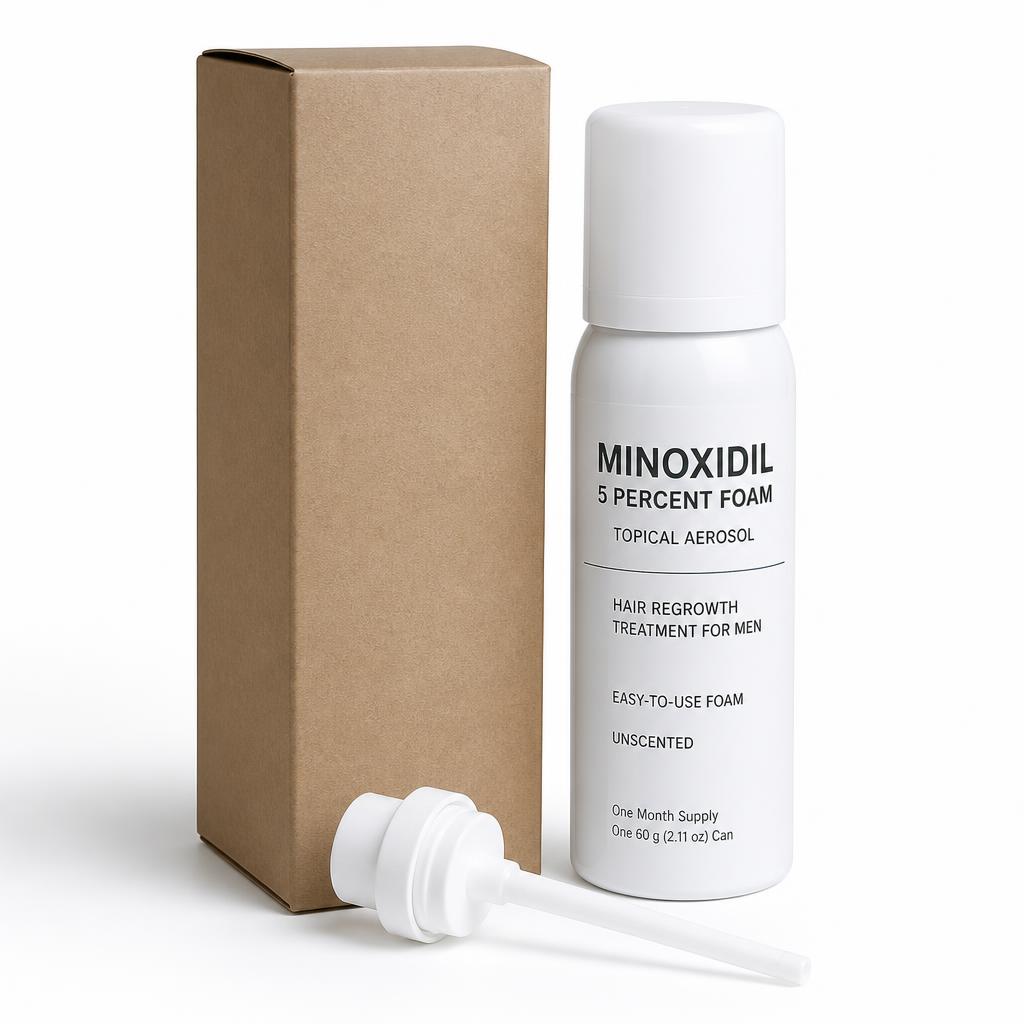
Rogaine is a topical hair regrowth treatment. It contains 5% minoxidil. The FDA approved the 2% solution in 1988 for men and the 5% extra strength formula in 1997. Rogaine shortens the resting phase of hair follicles. It extends the active growth phase. Results appear after 3 to 6 months of consistent twice-daily use. Rogaine is available over the counter. It does not require a prescription.
Minoxidil was originally developed as an oral antihypertensive drug. Researchers observed hair growth as a side effect during clinical use. Topical reformulation delivered the active ingredient directly to the scalp. This bypassed systemic circulation and reduced cardiovascular exposure. Modern Rogaine comes as foam or solution. Both forms require daily commitment. Stopping treatment reverses gains within 3 to 4 months.
- Form: 5% foam or solution, OTC, no prescription required
- Dose: 1 mL twice daily to dry scalp, morning and evening
- Onset: 3 to 6 months for visible thickening, 12 months for maximum results
- FDA status: Approved 1988 (2%), 1997 (5% extra strength)
What Is Rogaine
Rogaine contains minoxidil. It is a topical vasodilator used for androgenetic alopecia. The 5% strength is approved for men. The 2% strength is approved for women. Rogaine foam uses a propylene glycol-free base. This reduces scalp irritation. The solution contains propylene glycol and alcohol. Some users prefer the foam for faster drying. Others prefer the solution for precise dropper application.
The active ingredient is minoxidil. Generic versions contain the same concentration. The difference lies in inactive ingredients and delivery systems. Rogaine foam dries in roughly 15 minutes. The solution may take 30 minutes. Both require consistent twice-daily application. Both demand a 4-month minimum before evaluating results.
How Rogaine Works
Minoxidil shortens the telogen phase of hair follicles. It pushes resting follicles into the anagen growth phase prematurely. It also prolongs anagen and increases follicle size. Hair shafts thicken over time. More follicles enter active growth simultaneously. Coverage improves visually.
The mechanism involves potassium channel opening. Minoxidil sulphate opens ATP-sensitive KATP channels in dermal papilla cells. Human follicles express two channel forms: Kir6.2/SUR1 and Kir6.1/SUR2B. Minoxidil stimulates SUR2 channels specifically. This triggers cell proliferation and vascular endothelial growth factor release.
Key mechanisms:
- Telogen shortening: Resting follicles enter growth phase faster. Shedding decreases after 8 to 12 weeks.
- Anagen prolongation: Active growth lasts longer. Hair density increases.
- Follicle enlargement: Miniaturized follicles expand. Shaft diameter improves.
- VEGF stimulation: Blood flow to follicles increases. Nutrient delivery improves.
Conditions Treated by Rogaine
Rogaine helps men with androgenetic alopecia. This is male pattern baldness. It affects the vertex and crown. It does not treat receding hairlines as effectively. It does not cure baldness. It slows progression and supports regrowth.
Rogaine is not for:
- Hair loss from chemotherapy
- Patchy alopecia areata
- Scarring alopecia
- Hair loss from nutritional deficiency
- Beard or body hair growth (off-label)
Rogaine Dosage and Strengths
Available Forms
Manufacturers produce minoxidil in two primary delivery forms. Both use 5% concentration for men.
- Rogaine Foam 5%: One-half capful twice daily. Propylene glycol-free. Dries in 15 minutes.
- Rogaine Solution 5%: One milliliter twice daily. Dropper included. Better for precise scalp targeting.
- Generic Minoxidil 5% Foam: Same active ingredient. Same dosing. Different inactive base.
- Generic Minoxidil 5% Solution: Same concentration. Often sold in larger bottles.
Standard Adult Application
Apply to dry scalp twice daily. Morning and evening. Use the recommended amount. Half a capful of foam. Or one milliliter of solution. Spread evenly over thinning areas. Wash hands after application. Let dry completely before styling or sleeping.
Do not apply to broken or irritated skin. Avoid contact with eyes, nose and mouth. Rinse with water if accidental contact occurs. Do not shampoo for 4 hours after application. This allows absorption. Consistency matters more than exact timing. Patients using Flonase or other topical scalp treatments should consult a dermatologist before combining products.
Missed Application Instructions
Apply the missed dose when you remember. Skip it if the next application is within 4 hours. Do not double the amount. Doubling increases side effect risk without improving results. Resume the normal schedule.
Rogaine Foam vs Solution
Rogaine foam and solution share the same active ingredient. They differ in base formula and user experience.
Foam uses a patented propylene glycol-free base. It dries faster. It causes less scalp itching. It costs more per milliliter. Solution uses alcohol and propylene glycol. It allows precise dropper targeting. It may cause dryness in sensitive users. It costs less.
Choose foam if you have sensitive skin or style hair frequently. Choose solution if you want lower cost and precise application. Both require twice-daily use. Both need 4 months minimum. Neither works for everyone. Clinical response varies by genetics and follicle sensitivity.
Side Effects
Common Side Effects
Most users tolerate Rogaine well. Mild effects usually resolve within 2 weeks:
- Scalp itching or dryness
- Flaking or dandruff-like shedding
- Initial increased hair shedding (first 2 to 4 weeks)
- Scalp redness at application site
- Unwanted facial hair growth from contact transfer
Serious Side Effects
Stop using Rogaine and contact a doctor if you experience:
- Severe allergic reaction: difficulty breathing, hives, facial swelling
- Chest pain or rapid heartbeat
- Dizziness or fainting
- Sudden weight gain or swelling in hands and feet
- Severe scalp irritation with open sores
Systemic absorption from topical application is low. Mean serum levels after 5% use reach 1.8 ng/ml. The 2% formula produces 0.7 ng/ml. These levels are far below the 21.7 ng/ml threshold for hemodynamic changes. No cases of pericardial effusion have been reported with topical use after 25 years of monitoring.
Who Should Not Use Rogaine
Do not use Rogaine if you have no family history of hair loss. Sudden patchy hair loss requires medical evaluation. Do not use if your scalp is red, inflamed or infected. Do not use if you are under 18 years old.
Women who are pregnant or breastfeeding should avoid the 5% strength. The 2% strength requires doctor guidance during pregnancy. Do not use on body or facial hair unless directed by a dermatologist. People taking MCT oil or other supplements should disclose all products to their doctor before starting treatment.
Warnings and Precautions
Rogaine is flammable. Keep away from fire and heat during application and until dry. Do not smoke while applying. Allow foam or solution to dry completely before using hair dryers or styling tools.
Avoid contact with eyes, nose and mouth. Rinse with water if contact occurs. Wash hands after application. Unwanted facial hair may develop if the product transfers to the face. Use a pillowcase you do not mind staining. The solution can discolor fabric.
Initial shedding is normal. Old hairs fall out to make room for new growth. This lasts 2 to 4 weeks. Do not stop treatment because of early shedding. Stopping reverses all gains within 3 to 4 months. Ask a doctor before use if you have heart disease.
Drug Interactions
Topical minoxidil has minimal systemic absorption. Interactions are rare. However, caution applies if you take:
- Blood pressure medications: Minoxidil was originally an antihypertensive. Monitor blood pressure.
- Scalp medications: Combining with corticosteroid scalp solutions may increase irritation.
- Retinoids: May increase scalp absorption of minoxidil.
Rogaine and Pregnancy
Rogaine 5% is not recommended during pregnancy. The 2% strength may be used with caution if benefits outweigh risks. Minoxidil passes into breast milk in small amounts. Avoid contact with infant skin. Wash hands thoroughly after application.
Overdose Information
Topical overdose is unlikely. Symptoms of excessive absorption include dizziness, flushing, chest pain and rapid heartbeat. Rinse scalp with water if you apply too much. Contact poison control if you swallow the product. Oral ingestion of minoxidil causes serious cardiovascular effects. Call 1-800-222-1222.
What to Know Before Buying
Rogaine is an OTC drug. It does not require a prescription. The FDA approved minoxidil for hair regrowth in 1988. Generic versions work equally well. They contain the same 5% active ingredient.
Check the Drug Facts label before purchase. Verify the concentration. Confirm the expiration date. Minoxidil loses potency after 2 years. Store in original packaging. Do not expose to extreme heat. Foam canisters are pressurized. Do not puncture. Choose products with clear NDC codes. Avoid unlabeled imports.
Storage and Handling
Store at room temperature between 20C and 25C. Keep away from heat and open flame. Do not store in the bathroom. Keep out of reach of children. Discard expired products. Do not use if the seal is broken.
Frequently Asked Questions
Is Rogaine FDA approved?
Yes. The FDA approved minoxidil 2% topical solution for men in 1988. The FDA approved the 2% formula for women in 1992. The 5% extra strength formula received FDA approval in 1997. All forms are OTC and do not require a prescription.
How fast does Rogaine work?
Initial shedding occurs in 2 to 4 weeks. Visible thickening appears after 3 to 6 months. Maximum results develop at 12 months. Stopping treatment reverses gains within 3 to 4 months.
Can you use Rogaine once daily?
The label recommends twice daily. Some users apply once daily to reduce hassle. Studies show twice daily produces better results. Once daily may slow progress. Consistency matters more than perfect timing.
What is the difference between Rogaine foam and solution?
Foam dries faster. It contains no propylene glycol. It causes less irritation. Solution uses a liquid dropper. It allows precise targeting. It may cause itching in sensitive users. Both contain 5% minoxidil. Both require twice-daily use.
Does Rogaine cause initial shedding?
Yes. Shedding is normal in the first 2 to 4 weeks. Old hairs fall out to make room for new growth. This is a sign the treatment is working. Do not stop because of early shedding. Stopping reverses all gains.
Can you drink alcohol while using Rogaine?
Moderate alcohol is safe. Alcohol does not interact with topical minoxidil. Heavy drinking may increase scalp dryness. Alcohol is a diuretic. It may reduce hydration. Stay hydrated for scalp health.
Is Rogaine safe for long-term use?
Yes. Rogaine is safe for continuous use. Studies follow users for 5 years. Side effects remain mild. Stopping treatment reverses gains. Long-term use requires consistent application.
Does generic minoxidil work as well as Rogaine?
Yes. Generic minoxidil contains the same 5% active ingredient. The FDA requires bioequivalence for OTC generics. The difference is in inactive ingredients and price. Choose based on your scalp sensitivity and budget.
Can Rogaine regrow a receding hairline?
Rogaine works best on the vertex and crown. Results on the hairline are limited. Some users see minor improvement at the temples. Most see no significant regrowth at the frontal hairline. It is FDA-approved for vertex balding.
Should you wash your hair before applying Rogaine?
Apply to dry scalp. You may wash hair before application. Wait until the scalp is completely dry. Do not shampoo for 4 hours after applying. This allows full absorption. Use a mild shampoo if you wash before treatment.
Questions about Rogaine? Email us at [email protected]. We read every message. Response time is typically one business day. We do not provide medical advice by email. For emergencies, call 911.
Editorial Standards: Our team reviews medical literature and FDA labeling to produce accurate patient guides. We do not sell hair products. Content is written and fact-checked by the VippHealth Editorial Team. Last updated on July 30, 2026. We regularly update this page to reflect the latest FDA guidelines and clinical research on hair loss therapy.
Important Medical Disclaimer
This guide provides educational content only. It does not replace medical advice. Talk to your doctor before starting any hair loss treatment. Do not use this site to diagnose or treat any condition. It is not reviewed by a licensed pharmacist or physician.
Emergency Notice: If you experience severe allergic reaction symptoms (difficulty breathing, facial swelling, hives) after using Rogaine, seek emergency care immediately. For suspected overdose or ingestion, contact Poison Control at 1-800-222-1222 or call 911.
Sources and References
- U.S. Food and Drug Administration — Minoxidil Approval History (1988, 1992, 1997)
- DailyMed — Minoxidil Topical Solution USP, 2% and 5% Drug Label (NIH)
- PubMed — Messenger AG et al. Minoxidil: mechanisms of action on hair growth. Br J Dermatol. 2004
- PubMed — Shorter K et al. Human hair follicles contain two forms of ATP-sensitive potassium channels. FASEB J. 2008
- PMC — Pericardial Disorders during Open Label Study of Systemic Minoxidil (3747 patients)