
INDEPENDENTLY REVIEWED – Last updated:
Reviewed by VippHealth Research Team. About our editorial process
MCT Oil
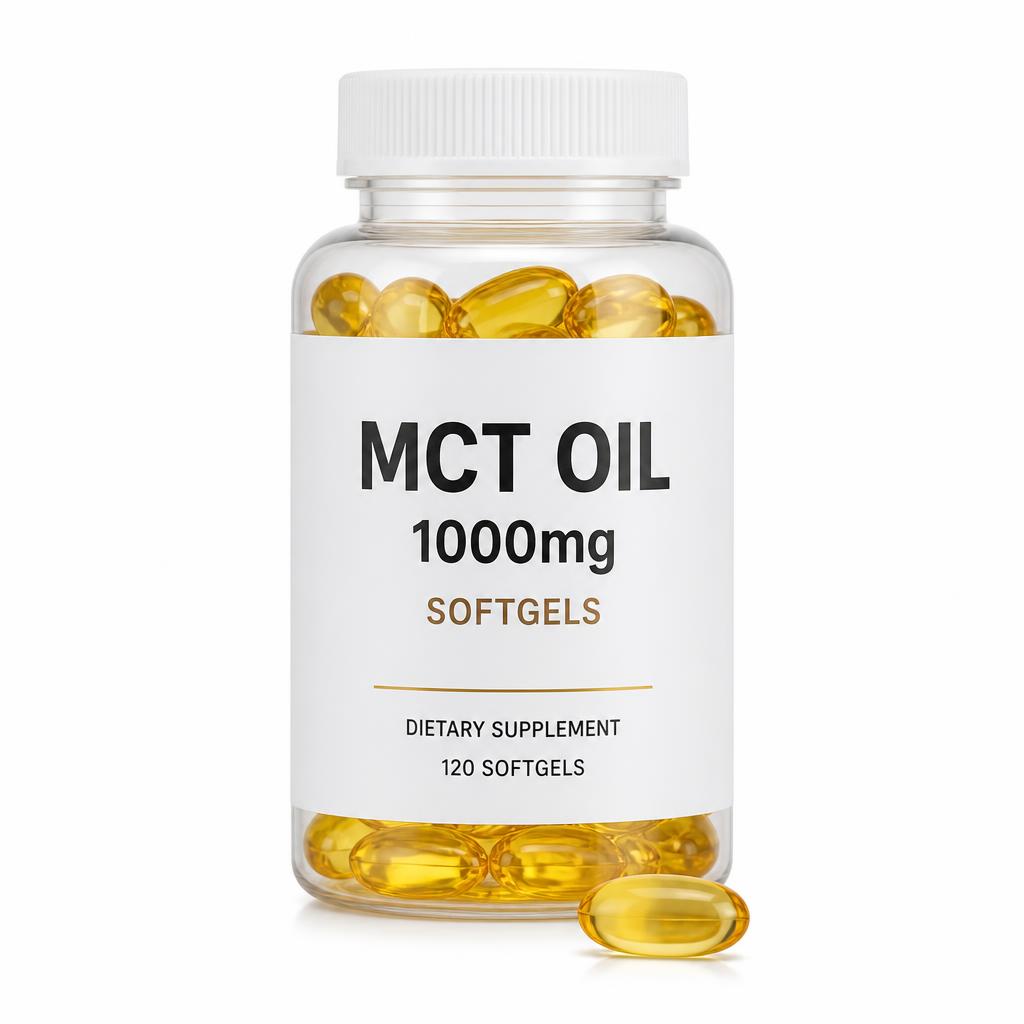
MCT oil is a supplement made from medium-chain triglycerides. These fats are shorter than most dietary fats. The body absorbs them quickly. They convert into ketones within minutes. MCT oil supports energy and mental clarity. It does not require a doctor’s order.
Unlike long-chain fats from olive oil or butter, MCTs bypass normal digestion. They travel straight from the gut to the liver. There they become an instant fuel source. Athletes use MCT oil before workouts. Office workers add it to morning coffee. Most users notice sharper focus within 30 to 60 minutes. Consumers buying MCT oil online should verify the C8 and C10 percentages. Look for products with at least 60 percent caprylic acid.
MCT Oil Sources and Types
MCT oil comes from coconut oil and palm kernel oil. Coconut oil contains about 55 to 65 percent MCTs. Palm oil contains 40 to 50 percent. Supplement makers extract and concentrate these specific fats. The result is a pure oil with higher potency than whole coconut oil.
Manufacturers classify MCTs by carbon chain length. Each type behaves differently in the body:
- C6 Caproic acid: Converts to ketones fastest. Has a strong taste. Can irritate the stomach.
- C8 Caprylic acid: The most efficient ketone producer. Most premium MCT oils contain 60 to 95 percent C8.
- C10 Capric acid: Slower ketone conversion. Supports gut health. Often blended with C8.
- C12 Lauric acid: Behaves more like a long-chain fat. Some brands exclude it from MCT oil.
How MCT Oil Supports Energy
MCT oil enters the bloodstream without bile or pancreatic enzymes. This makes it ideal for people with gallbladder issues. The liver converts MCTs into ketone bodies. These ketones cross the blood-brain barrier. Brain cells use them as fuel.
Key mechanisms:
- Rapid ketone production: Raises blood ketone levels by 0.5 to 1.0 mmol/L within 2 hours.
- Brain fuel: Ketones provide an alternative energy source to glucose. Supports mental clarity.
- Thermogenic effect: Increases calorie burn by 5 to 10 percent for 2 to 3 hours after intake.
- Appetite support: Ketones signal satiety hormones. May reduce calorie intake at the next meal.
MCT Oil Dosage and Strengths
Available Forms
Manufacturers sell MCT oil in several formats. Your choice depends on convenience and tolerance.
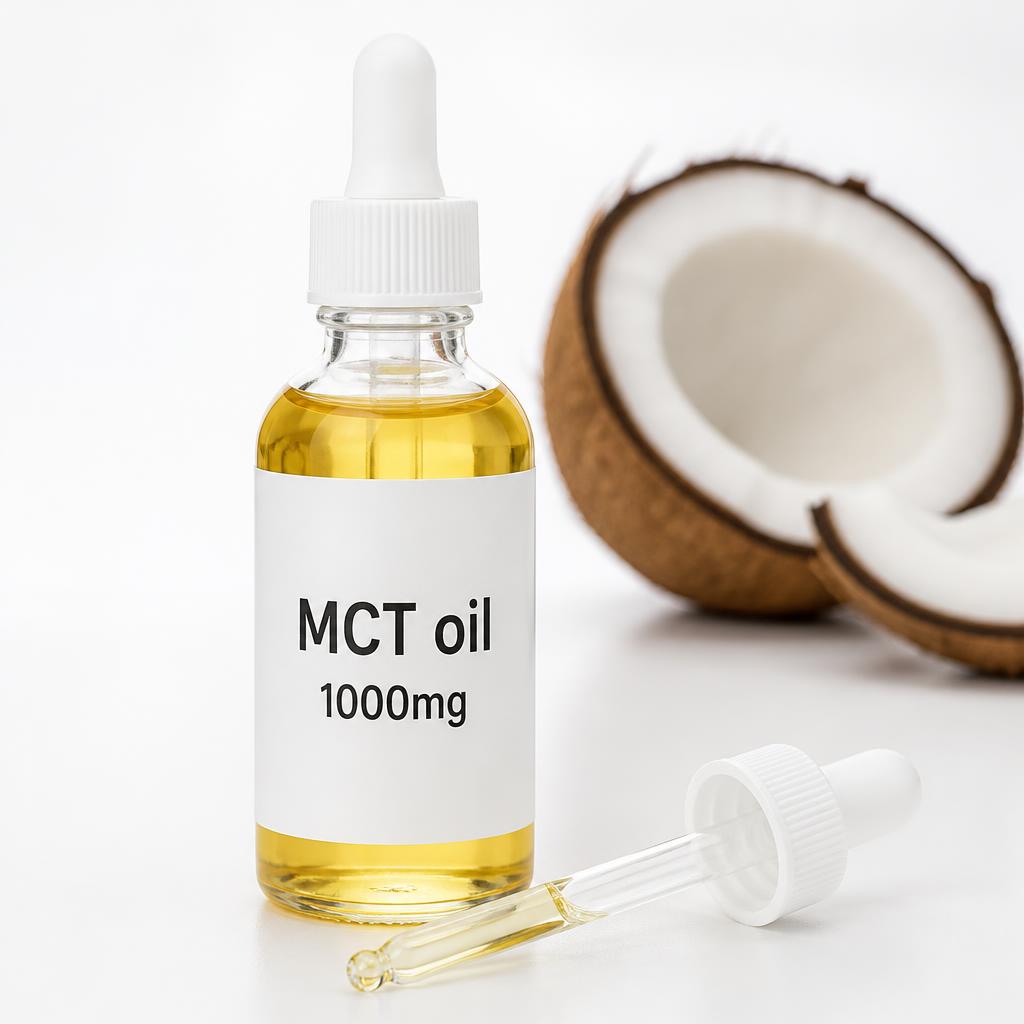
- Liquid oil 1000mg per serving: Standard option. Mix into coffee or smoothies. Fastest absorption.
- Softgel capsules 1000mg: Portable. No taste. Ideal for travel. Slower absorption than liquid.
- Powder 500mg to 1000mg per scoop: Mixes into drinks. Less oily texture. Often contains fiber.
- C8 concentrate 95% pure: Premium option. Maximum ketone production. Higher cost per serving.
- C8/C10 blend 60/40: Balanced option. Good ketone output with lower stomach upset risk.
Standard Adult Dosing
Start with 1 teaspoon (5ml) daily. This equals about 4500mg of MCT oil. Increase by 1 teaspoon every 3 days. Most users settle at 1 to 2 tablespoons (15 to 30ml) daily. This equals 13 to 26 grams of MCTs.
Do not exceed 4 tablespoons (60ml) daily without medical supervision. Higher doses cause diarrhea and stomach cramps. Take with food or coffee. Taking on an empty stomach increases nausea. Split doses into morning and afternoon. Avoid evening doses. MCT oil can disrupt sleep in sensitive users.
Missed Dose Instructions
Take the missed dose when you remember. Skip it if the next dose is within 4 hours. Do not double the dose. Doubling increases stomach upset and loose stools. Resume the normal schedule. Consistency matters more than exact timing.
2026 MCT Oil Price Comparison
Prices below reflect MCT oil costs at major US retailers. Actual prices vary by location and promotions.
*Prices verified July 2026. Bulk 32-ounce bottles reduce per-ounce costs by 40 to 50 percent. Subscription services reduce prices by an additional 10 to 15 percent.
Monthly Savings: Premium vs Generic
Brain Octane C8 (16 oz)
$29.95
Now Foods MCT (32 oz)
$18.99
Your Monthly Savings
$40.91
MCT Oil vs Coconut Oil
MCT oil and coconut oil share the same source. They are not the same product. Coconut oil contains lauric acid (C12), caprylic acid (C8) and capric acid (C10). MCT oil isolates and concentrates C8 and C10.
Coconut oil contains 50 to 65 percent MCTs. The rest is long-chain fats. MCT oil contains 100 percent medium-chain fats. This makes MCT oil more potent for ketone production. Coconut oil works better for cooking. It has a higher smoke point. MCT oil works better for supplementation. It absorbs faster.
Choose MCT oil for energy, mental clarity and ketone support. Choose coconut oil for cooking, skin care and general dietary fat. Do not cook with MCT oil at high heat. It has a low smoke point. Some users combine both. They cook with coconut oil. They add MCT oil to coffee.
Side Effects
Common Side Effects
Most users tolerate MCT oil well. Mild effects usually resolve within 1 week:
- Stomach cramps or bloating
- Diarrhea at doses above 2 tablespoons
- Nausea on an empty stomach
- Oily stools
- Heartburn
Serious Side Effects
Stop taking MCT oil and contact a doctor if you experience:
- Severe allergic reaction: difficulty breathing, hives, facial swelling
- Severe abdominal pain with vomiting
- Signs of liver trouble: yellowing skin, dark urine, extreme fatigue
- Persistent diarrhea leading to dehydration
- Chest pain or irregular heartbeat
Who Should Not Use MCT Oil
MCT oil is not recommended for people with severe liver disease. The liver processes MCTs directly. Impaired liver function reduces clearance. Do not use if you have a history of chylomicron retention disease. This rare disorder affects fat absorption.
People with chronic diarrhea or malabsorption syndromes should avoid MCT oil. It worsens loose stools. Do not use if you have gallbladder obstruction. MCT oil bypasses the gallbladder, but underlying obstruction requires medical attention. Pregnant women should consult a doctor before use.
Warnings and Precautions
Stomach Tolerance
Start with a small dose. Increase gradually. Taking too much too fast causes diarrhea. This is the most common complaint. Wait 3 days between dose increases. Take with food or coffee. Never take on an empty stomach if you are sensitive.
Liver Health
MCT oil is processed by the liver. People with fatty liver disease, hepatitis or cirrhosis should consult a doctor. Monitor liver enzymes if using daily for more than 3 months. Stop use if liver function tests worsen.
Heart Health
MCT oil raises LDL cholesterol in some users. This effect is mild at standard doses. People with familial hypercholesterolemia should monitor lipid panels. Replace MCT oil with C8-only products if cholesterol rises.
Drug Interactions
MCT oil interacts with several medication classes. Always provide your doctor with a complete list.
- Orlistat: Blocks fat absorption. Reduces MCT oil effectiveness. May increase gastrointestinal side effects.
- Cholestyramine: Binds to fats in the gut. Reduces MCT absorption. Take MCT oil 2 hours before or 4 hours after.
- Blood thinners (warfarin): High-dose MCT oil may affect vitamin K absorption. Monitor INR.
- Statins: MCT oil may affect cholesterol levels. Monitor lipid panels.
- Diabetes medications: MCT oil may affect blood sugar. Monitor glucose when starting.
MCT Oil and Pregnancy
MCT oil is not proven safe during pregnancy. Human data is limited. Animal studies show no harm at moderate doses. Avoid use during the first trimester. Consult your obstetrician before use. MCT oil passes into breast milk in small amounts. It is likely safe during breastfeeding. Monitor infant digestion.
Overdose Information
Overdose symptoms include severe diarrhea, abdominal cramping, dehydration and nausea. There is no established lethal dose. Treatment is supportive. Hydration and rest. Reduce or stop the dose. Contact poison control if you exceed 100ml in a single day. Do not induce vomiting.
How to Obtain MCT Oil
MCT oil is available over the counter at health food stores, pharmacies and online retailers. Major sellers include Amazon, iHerb, Walmart, GNC and Bulletproof. Look for products with disclosed C8 and C10 percentages. Avoid proprietary blends without specific amounts.
Choose C8-dominant products for maximum ketone production. Choose C8/C10 blends for lower cost. Check expiration dates. MCT oil oxidizes after 2 years. Store in a cool, dry place. Avoid transparent bottles. Light accelerates degradation.
Storage and Handling
Store MCT oil at room temperature between 20C and 25C. Keep away from heat and direct sunlight. Do not refrigerate. Refrigeration causes clouding. This does not affect safety. Let it return to room temperature before use. Keep out of reach of children. Discard expired products. Do not use if the seal is broken.
Frequently Asked Questions
Is MCT oil FDA approved?
No. The FDA does not approve dietary supplements before sale. Manufacturers must ensure safety and accurate labeling. The FDA monitors adverse events after products reach the market.
How fast does MCT oil work?
Energy effects appear within 30 to 60 minutes. Blood ketone levels rise within 2 hours. Mental clarity peaks at 1 to 2 hours. Stomach effects appear immediately if the dose is too high. Start with 1 teaspoon to assess tolerance.
Can you take MCT oil daily?
Yes. Daily use at 1 to 2 tablespoons is safe for most adults. Start with 1 teaspoon. Increase gradually. Do not exceed 4 tablespoons daily. Take breaks every 12 weeks. This prevents tolerance and allows your body to reset.
What is the difference between MCT oil and coconut oil?
MCT oil isolates medium-chain fats from coconut oil. It contains 100 percent MCTs. Coconut oil contains 50 to 65 percent MCTs plus long-chain fats. MCT oil absorbs faster. It produces more ketones. Coconut oil is better for cooking. It has a higher smoke point. Choose MCT oil for supplementation. Choose coconut oil for culinary use.
Does MCT oil cause weight gain?
No. MCT oil does not cause weight gain at standard doses. It contains 115 calories per tablespoon. Some studies show it supports weight management through increased satiety. It is not a weight loss drug. Count calories from MCT oil in your daily total.
Can you drink coffee with MCT oil?
Yes. Coffee is the most common delivery method. Blend 1 teaspoon into hot coffee. This creates a creamy texture. It slows caffeine absorption. It extends energy without jitters. Do not add to iced coffee without blending. The oil separates.
Is MCT oil safe for long-term use?
Studies show safety up to 3 months at 30ml daily. Long-term data beyond 3 months is limited. Take a 2-week break every 12 weeks. Monitor cholesterol and liver enzymes. Consult your doctor before extending use.
How much does MCT oil cost?
Generic MCT oil costs 50 to 80 cents per ounce. Premium C8 concentrates cost 1.50 to 2.00 dollars per ounce. Softgels cost 15 to 25 dollars per bottle. Subscription services reduce prices by 10 to 15 percent. Bulk 32-ounce bottles offer the best value.
Where can I buy MCT oil?
Buy MCT oil at Amazon, iHerb, Walmart, GNC and Bulletproof. Choose products with disclosed C8 and C10 percentages. Avoid proprietary blends without specific amounts. Check expiration dates. Choose dark bottles to prevent oxidation. Verify third-party testing when available.
Can MCT oil replace a meal?
No. MCT oil provides fat calories only. It lacks protein, vitamins and minerals. Some people use it during intermittent fasting. It does not break a fast for ketone purposes. It does not replace balanced nutrition. Use it as a supplement, not a meal substitute.
Questions About MCT Oil?
Our team answers questions about MCT oil dosing, C8 vs C10 and coffee recipes. We do not sell supplements.
Email Support