PRESCRIPTION REQUIRED — SCHEDULE IV CONTROLLED SUBSTANCE — Last updated:
Written and fact-checked by VippHealth Editorial Team from FDA labeling and clinical references. About our editorial process
Provigil
Provigil is the brand name for modafinil. It is a wakefulness-promoting agent. Doctors prescribe it for three specific sleep disorders. A valid prescription is mandatory. Provigil enhances alertness without the cardiovascular rebound of amphetamine stimulants. Take Provigil in the morning. Evening doses cause insomnia. Never share or sell Provigil.
VippHealth does not sell medication. We publish facts for patients and caregivers.
Unlike amphetamine stimulants, Provigil does not produce a euphoric high or severe crash. Doctors prefer Provigil for long-term sleep disorders. The abuse risk is lower than amphetamines. The FDA approved modafinil in 1998. Multiple metabolic pathways process it, including CYP3A4/5 and a non-CYP pathway. Patients with severe hepatic impairment require dose reduction to 100mg daily.
- Dose range: 100mg to 200mg daily, morning dosing
- Status: Schedule IV controlled substance, prescription required
- Primary warning: Stevens-Johnson syndrome risk, stop at first sign of rash
- Half-life: 12 to 15 hours; effects last 10 to 12 hours
What Is Provigil
Provigil contains modafinil. It is a synthetic wakefulness agent. Doctors prescribe it for narcolepsy, obstructive sleep apnea, and shift work sleep disorder. Provigil is not approved for cognitive enhancement or recreational use. Specialist approval is required for any off-label indication.
Provigil is biologically active as administered. It does not require hepatic activation. Patients with severe liver disease can use it. Provigil is classified as Schedule IV. This reflects lower abuse potential than Schedule II stimulants. It still requires strict dispensing controls.
How Modafinil Works
Unlike many medications, modafinil’s exact mechanism is not fully understood. The FDA label states this plainly. What is known: it increases dopamine levels by binding the dopamine reuptake transporter. It does not trigger the dopamine surge associated with classic stimulants. This explains the different risk profile.
Provigil acts on multiple neurotransmitter systems. It increases norepinephrine. This boosts alertness. It activates histamine signaling in the tuberomammillary nucleus. It stabilizes orexin neurons in the hypothalamus. These actions regulate sleep-wake cycles.
This mechanism treats sleepiness without amphetamine-like cardiovascular rebound. Provigil still raises blood pressure 3 to 5 mmHg. Heart rate increases 5 to 10 beats per minute. Patients with uncontrolled hypertension require alternative therapy.
Legal Status: Schedule IV Controlled Substance
Modafinil has been a Schedule IV controlled substance since 1999. This reflects a documented, low-but-real potential for misuse, psychological dependence, and diversion. Prescriptions typically cannot be refilled more than five times within six months without a new prescription. Prescribers must be DEA-registered. Pharmacies track dispensing closely.
This scheduling exists because clinical studies found modafinil produces measurable psychoactive effects. It has shown reinforcing effects in research settings. This is a meaningfully different risk category than non-scheduled drugs. Understand this before starting treatment.
Off-Label “Cognitive Enhancement” Use
Modafinil has a reputation as an unprescribed “smart drug” for exam cramming, long shifts, or general productivity. Using Provigil without a prescription is illegal in the United States. It is a controlled substance. It also means no medical screening for cardiovascular, psychiatric, and skin-reaction risks.
Sourcing modafinil without a prescription — commonly through overseas sellers — removes any assurance the product is genuine, correctly dosed, or free of contamination. The FDA has issued warnings about counterfeit modafinil products sold online.
Conditions Treated by Provigil
Doctors prescribe Provigil for a narrow range of sleep disorders. Patients researching treatment options often have one of the following diagnoses:
- Narcolepsy: excessive daytime sleepiness with or without cataplexy. Polysomnography and multiple sleep latency test are required for diagnosis.
- Obstructive sleep apnea: residual sleepiness despite adequate CPAP adherence. Provigil is an add-on. It is not a replacement for CPAP therapy.
- Shift work sleep disorder: documented night shift history with impaired alertness during work hours. Diagnosis requires a sleep diary and actigraphy.
These three indications require documented diagnosis. Provigil is not prescribed for fatigue without underlying sleep pathology. A valid prescription requires polysomnography results or documented shift work history. For sleep apnea patients, CPAP adherence data is required.
Provigil and Sleep Apnea: An Important Limitation
For obstructive sleep apnea specifically, Provigil treats the excessive daytime sleepiness that results from OSA. It does not treat the airway obstruction itself. It is meant to be used alongside, not instead of, a primary OSA treatment like CPAP.
Stopping CPAP because Provigil makes you feel less sleepy leaves the underlying breathing problem — and its cardiovascular risks — unaddressed. This is a critical limitation patients must understand before starting therapy.
Provigil Dosage and Strengths
Available Forms
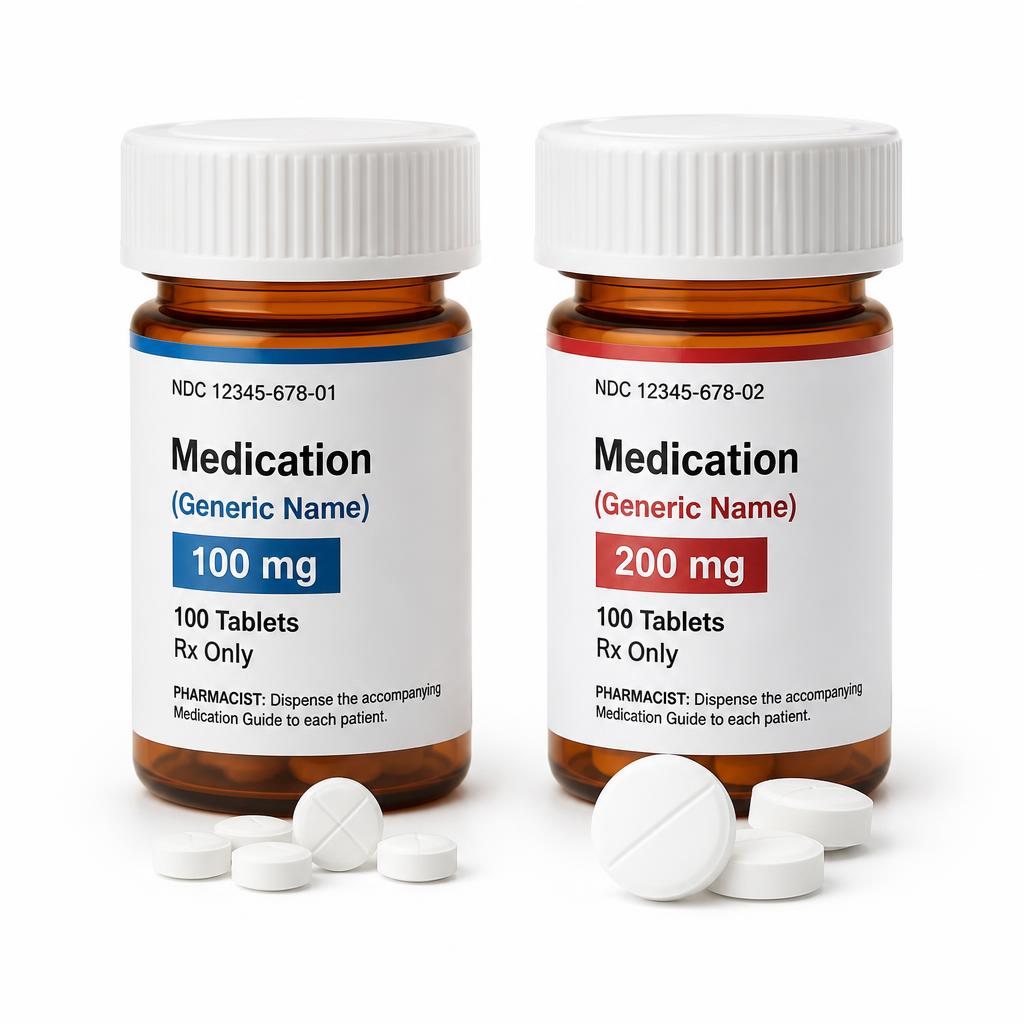
Modafinil is manufactured in two tablet strengths. Your doctor will select the appropriate strength based on your diagnosis, age, and response to therapy.
- 100mg tablets: used for elderly patients, those with hepatic impairment, and patients starting therapy to assess tolerance.
- 200mg tablets: standard adult dose for narcolepsy, sleep apnea, and shift work disorder. Some patients require 400mg daily split into two doses.
Standard Adult Dosing
Dosing depends on the condition being treated. For narcolepsy and obstructive sleep apnea, doctors typically prescribe 200mg once daily in the morning. For shift work disorder, 200mg is taken one hour before the start of the shift.
Take Provigil exactly as prescribed. Do not increase the dose without medical supervision. Higher doses increase the risk of insomnia, anxiety, and blood pressure spikes. Doses should not be adjusted to counter tolerance. This is a warning sign of misuse that prescribers watch for.
Missed Dose Instructions
If you miss a dose, take it as soon as you remember. Avoid taking it too late in the day. It can interfere with nighttime sleep. Skip a dose you remember close to bedtime rather than taking it very late.
Pediatric Considerations
Provigil is not FDA-approved for children under 17 years. Pediatric use is limited to severe narcolepsy under specialist supervision. Long-term effects on developing brains are unknown. Parents should watch for mood changes, insomnia, and appetite suppression.
Provigil vs Nuvigil
Provigil contains modafinil, a racemic mixture of R and S enantiomers. Nuvigil contains armodafinil, which is only the R enantiomer. The R enantiomer has a longer half-life of 15 or more hours compared to 12 to 15 hours for modafinil.
Nuvigil is typically prescribed once daily. Provigil may require twice-daily dosing in some patients. Both carry identical SJS and TEN risks and identical psychiatric warnings. Nuvigil is generally 10 to 15 percent more expensive than generic modafinil. In patients with healthy livers, both produce similar therapeutic effects. Dosing is not equivalent milligram for milligram. A 200mg Provigil tablet is roughly comparable to a 150mg Nuvigil tablet.
Side Effects
Common Side Effects
Most patients experience at least one mild side effect during treatment. Clinical trial data from the FDA label shows the following rates. Headache occurs in 34 percent of patients, usually mild and resolving in one to two weeks. Nausea affects 11 percent. Nervousness or anxiety occurs in 7 percent. Insomnia affects 5 percent. Dry mouth occurs in 4 percent. Reduced appetite may develop. Monitor weight monthly. These usually resolve after dose adjustment.
Serious Side Effects
Contact emergency medical services immediately if you experience:
- Severe skin reaction with blistering or peeling. Possible Stevens-Johnson syndrome or toxic epidermal necrolysis. Stop Provigil immediately and call 911.
- Chest pain or irregular heartbeat. Possible cardiac event. Go to the ER immediately.
- Suicidal thoughts. Call 988 Suicide and Crisis Lifeline.
- Hallucinations or psychosis. Discontinue medication and seek psychiatric care.
- Severe allergic reaction with difficulty breathing. Possible anaphylaxis. Call 911.
Long-term use increases the risk of hypertension, anxiety disorders, and sleep architecture disruption. Regular blood pressure checks and mental health screening are essential for patients on prolonged therapy.
Who Should Not Take Provigil
Provigil is contraindicated in patients with a history of Stevens-Johnson syndrome or severe skin rash with modafinil or armodafinil. Re-exposure may cause severe recurrence. Do not use Provigil if you have hypersensitivity to modafinil, armodafinil, or tablet excipients.
Patients with uncontrolled hypertension above 160 over 100 mmHg, serious heart conditions, history of left ventricular hypertrophy, or mitral valve prolapse with arrhythmia must avoid Provigil. Those with a history of psychosis, mania, or severe anxiety disorders require psychiatric clearance before starting therapy.
Warnings and Precautions
Cardiovascular Risks
Provigil increases heart rate by 5 to 10 beats per minute and systolic blood pressure by 3 to 5 mmHg. It is contraindicated in uncontrolled hypertension above 160 over 100 mmHg, history of left ventricular hypertrophy, recent myocardial infarction within six months, and significant arrhythmias. Patients with stable heart disease require baseline ECG and blood pressure monitoring at week 2, month 1, and month 3.
Psychiatric Adverse Effects
Contact your doctor immediately if you experience anxiety, agitation, or insomnia that interferes with daily function. Mania and hypomania can occur in patients with bipolar disorder. Hallucinations, delusions, and paranoia are rare but require immediate discontinuation and psychiatric evaluation. Suicidal ideation has been reported, especially in patients with pre-existing depression. Monitor mood closely during the first month.
Skin Reactions
Stop Provigil immediately and seek emergency care if you develop rash with blistering, peeling skin, mouth sores, eye sores, fever with widespread skin redness, or swollen lymph nodes. SJS and TEN require early discontinuation. Do not restart modafinil or armodafinil after any serious skin reaction.
Hormonal Contraception
Provigil induces CYP3A4 enzymes. This reduces ethinyl estradiol AUC by approximately 18 percent. The effect persists for one month after stopping Provigil. Use non-hormonal methods during treatment and for 30 days after discontinuation. Copper IUD, condoms, and barrier methods are recommended. Do not rely on birth control pills, patches, rings, or implants alone.
Dependence and Misuse Potential
As a Schedule IV drug, Provigil carries a documented potential for psychological dependence. Risk rises with prolonged high-dose use. Physicians monitor for signs of misuse, such as unauthorized dose increases or drug-seeking behavior. Stopping abruptly after prolonged high-dose use has been associated with fatigue, sleep disturbance, and low mood in some patients.
Drug Interactions
Provigil interacts with numerous medications. Always provide your doctor with a complete list of prescriptions, supplements, and over-the-counter drugs.
- Hormonal contraceptives: effectiveness reduced. Use non-hormonal backup for 30 days after stopping.
- Warfarin: INR may rise during concurrent use. Monitoring required.
- Cyclosporine: levels may drop because of CYP3A4 induction.
- Antifungals (ketoconazole): may increase modafinil levels in blood.
- Antibiotics (rifampin): may decrease modafinil effectiveness.
- Seizure medications (phenytoin, phenobarbital): reduce modafinil concentration.
Provigil and Pregnancy
Modafinil crosses the placenta. Animal studies show fetal harm including low birth weight and skeletal abnormalities. Human data is limited. The FDA classifies modafinil as Category C. Pregnant patients should use the lowest effective dose for the shortest possible time. Discuss risks with your OB-GYN before starting or continuing therapy.
Provigil passes into breast milk in small amounts. Infant sedation and poor feeding have been reported. Breastfeeding mothers should monitor infants for excessive sleepiness, poor weight gain, and irritability. Consult a pediatrician before nursing while on Provigil. Some doctors recommend discontinuing breastfeeding during treatment.
Overdose Information
Overdose symptoms include severe agitation, insomnia, tachycardia, hypertension, tremor, nausea, diarrhea, and confusion. Very high doses may cause hallucinations or psychosis. An overdose requires immediate emergency medical attention. Do not induce vomiting unless instructed by poison control.
Chronic overdose from prolonged high-dose therapy causes persistent anxiety, hypertension, and sleep disruption. Treatment involves gradual dose reduction under physician supervision. No specific antidote exists for modafinil overdose. Supportive care includes blood pressure monitoring, sedation if needed, and cardiac monitoring.
Storage and Handling
Store Provigil at room temperature between 20C and 25C. Keep the container tightly closed and away from moisture, heat, and direct light. Do not store in the bathroom. Keep out of reach of children and pets. Store Provigil in a secure location to prevent theft or misuse.
Dispose of expired or unused medication through a pharmacy take-back program. Do not flush Provigil down the toilet unless specifically instructed. The DEA holds periodic National Prescription Drug Take-Back Day events for safe disposal of controlled substances.
Frequently Asked Questions
Is Provigil a controlled substance?
Yes. Modafinil has been classified as a Schedule IV controlled substance under the federal Controlled Substances Act since 1999, due to a documented, though comparatively low, potential for misuse and dependence.
Is it legal to buy modafinil without a prescription?
No. Because it is a Schedule IV controlled substance, possessing or using modafinil without a valid prescription is illegal in the United States, regardless of the intended purpose.
Does Provigil affect birth control pills?
Yes, significantly. Modafinil induces a liver enzyme that breaks down hormonal contraceptives faster, reducing their effectiveness. Anyone using hormonal birth control should use an additional non-hormonal method during treatment and for a month afterward.
Why does Provigil have a skin reaction warning?
Rare but serious skin reactions, including Stevens-Johnson syndrome, have been reported with modafinil use. There is no reliable way to predict who will develop one, so any new or worsening rash needs prompt medical evaluation rather than a wait-and-see approach.
Can I stop using CPAP if Provigil makes me feel more awake?
No. Provigil treats the sleepiness caused by sleep apnea, not the underlying airway obstruction. Stopping CPAP or another primary OSA treatment leaves the breathing disorder — and its cardiovascular risks — unaddressed, even if you feel less drowsy.
Is modafinil addictive?
It has a documented, though comparatively modest, potential for psychological dependence, which is why it is a Schedule IV controlled substance. Risk rises with prolonged high-dose use, especially outside medical supervision.
Is Provigil safe for people with heart conditions?
It requires caution. Clinical trials reported chest pain, palpitations, and ECG changes, particularly in people with mitral valve prolapse or left ventricular hypertrophy. Tell your doctor about any heart condition before starting Provigil.
How is Provigil different from Nuvigil?
Nuvigil contains armodafinil, a related single-isomer version of modafinil with a longer duration of action. They are not identical and are not automatically interchangeable. Your prescriber chooses based on your specific situation.
What should I do if I miss a dose?
Take it as soon as you remember, but avoid taking it too late in the day, since it can interfere with nighttime sleep. If you remember close to bedtime, it is usually better to skip that dose.
Why does modafinil have refill limits?
Because it is a Schedule IV controlled substance, federal and state regulations typically limit refills to five within six months before a new prescription is needed. This is standard oversight for controlled medications.
Questions about your Provigil prescription? Email us at [email protected]. We read every message. Response time is typically one business day. We do not provide medical advice by email. For emergencies, call 911.
Editorial Standards: Our team reviews medical literature and FDA labeling to produce accurate patient guides. We do not sell medication. Content is written and fact-checked by the VippHealth Editorial Team. Last updated on July 30, 2026. We regularly update this page to reflect the latest FDA guidelines, DEA scheduling, and clinical research on wakefulness-promoting agents.
Important Medical Disclaimer
This guide provides educational content only. It does not replace medical advice. Talk to your doctor before starting, stopping or changing Provigil. Do not use this site to diagnose or treat any condition. Provigil is a Schedule IV controlled substance. Use only as directed by a licensed physician.
Emergency Notice: If you experience signs of severe skin reaction, suicidal thoughts, or chest pain while taking modafinil, call 911 immediately. These are medical emergencies.
Sources and References
- FDA DailyMed — Modafinil Prescribing Information (Bionpharma Inc., 2022)
- DEA Controlled Substances Act — Schedule IV Classification (Effective January 27, 1999)
- NIH MedlinePlus — Modafinil Drug Information
- PubMed — An Updated Systematic Review and Meta-Analysis of Modafinil for Excessive Daytime Sleepiness in Narcolepsy (PMC12994070)
- NCBI StatPearls — Modafinil: Adverse Effects and Clinical Pharmacology (NBK531476)