
INDEPENDENTLY REVIEWED – Last updated:
Written and fact-checked by VippHealth Editorial Team from FDA labeling and clinical references. About our editorial process
Brahmi

Brahmi is an adaptogenic herb. It supports memory and mental clarity. The botanical name is Bacopa monnieri. It contains bacosides. These compounds support neuron communication. Brahmi does not require a doctor’s order. It is sold over the counter in the United States.
Unlike pharmaceutical stimulants, Brahmi works gradually. Most users notice sharper focus after 8 to 12 weeks. The herb has been used in Ayurvedic practice for over three thousand years. Modern extracts standardize bacoside content for consistent results. Consumers buying Brahmi online should verify third-party testing and bacoside percentage.
- Standard dose: 300mg to 450mg standardized extract daily, 10 to 20 percent bacoside glycosides
- Status: Over-the-counter dietary supplement, not FDA approved
- Primary warning: CYP enzyme inhibition — interacts with multiple medications
- Onset: Memory effects appear after 8 to 12 weeks of daily use
What Is Brahmi
Brahmi (Bacopa monnieri) is a creeping herb native to India and Southeast Asia. It grows in wet, marshy environments. The leaves contain bioactive compounds called bacosides. Bacosides A and B are the most studied. They support synaptic activity and antioxidant defense in the brain.
Supplement manufacturers sell Brahmi in several forms. Standardized extracts contain 10 to 20 percent bacoside glycosides. Whole-herb powders contain unstandardized levels. Capsules and tablets are the most common delivery forms. Some brands offer liquid extracts. Consumers should choose standardized extracts for predictable results.
The FDA has not approved Brahmi for any medical purpose. In 2019 the FDA issued a warning to dietary supplement manufacturers who made therapeutic claims about Bacopa monnieri. The agency regulates supplements as food, not as drugs.
How Brahmi Works
Brahmi supports the hippocampus. This brain region manages memory formation. Bacosides improve synaptic transmission. They also protect neurons from oxidative stress. The herb does not provide immediate stimulation. It builds cognitive support over time.
Key mechanisms:
- Synaptic support: Bacosides improve signaling between neurons.
- Antioxidant activity: Reduces oxidative stress in brain tissue.
- Acetylcholine support: Inhibits acetylcholinesterase, increasing acetylcholine levels.
- Stress response: Modulates cortisol without sedation.
A meta-analysis incorporating 9 randomized controlled trials with 437 participants demonstrated improved speed of attention and cognition and decreased reaction time after 12 weeks of standardized Bacopa monnieri extract. The studies used 300 to 450 mg daily of extract standardized to 10 to 20 percent bacoside glycosides.
A 2025 randomized trial of 101 adults aged 40 to 70 years found that 300 mg daily of Bacopa monnieri extract for 12 weeks did not improve primary cognitive outcomes. However, the treated group showed greater reductions in self-reported stress reactivity and fatigue after exposure to cognitive-demanding tasks. Adverse reactions were more frequent in the Bacopa group, primarily digestive complaints and headaches.
Conditions Supported by Brahmi
Brahmi supports cognitive wellness. It does not treat disease. It supports memory retention and mental clarity. It does not replace doctor-prescribed treatments.
A randomized trial of 54 healthy elderly participants aged 65 or older found that 300 mg daily of standardized Bacopa monnieri extract for 12 weeks enhanced delayed word recall memory scores relative to placebo. Stroop test results were similarly significant. Depression and anxiety scores decreased in the Bacopa group. Heart rate decreased slightly. The dose was well tolerated with few adverse events, primarily stomach upset.
Another trial in 81 adults aged 55 years and older reported that 12 weeks of Bacopa significantly improved memory acquisition and retention. A 2024 trial found that 160 mg twice daily for 8 weeks improved executive function, orientation, calculation, abstraction, delayed recall, attention and verbal fluency in adults with mild cognitive impairment. No effect on sleep quality was observed.
Brahmi is not for:
- Diagnosed cognitive disorders
- Replacement for doctor-prescribed ADHD protocols
- Immediate exam preparation or all-nighters
- Children under 12 years
Brahmi Dosage and Strengths
Available Forms
Manufacturers produce Brahmi in several strengths. Your choice depends on bacoside concentration.
- 300mg standardized capsules: 10 to 20 percent bacoside glycosides. Standard starting dose.
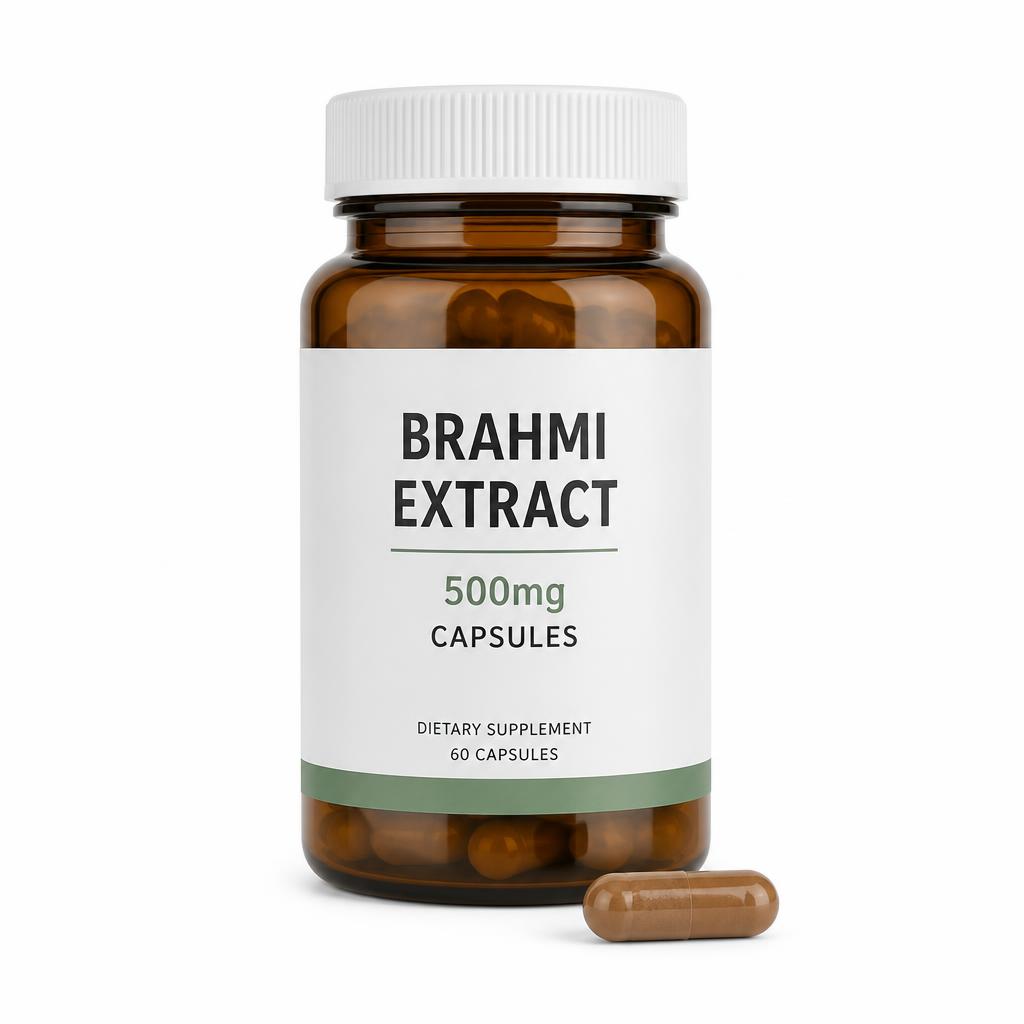
- 500mg whole-herb capsules: Unstandardized. Requires larger doses.
- 250mg high-potency extract: 45 to 50 percent bacosides. Smaller dose needed.
- Liquid extract: 1 to 2 droppers daily. Faster absorption.
Standard Adult Dosing
For memory support, most studies use 300mg to 450mg of standardized extract daily. Split into two doses. Morning and evening. Take with food. Fat improves bacoside absorption.
For stress support, lower doses of 150mg to 300mg work well. Do not exceed 1000mg daily. Higher doses increase stomach upset risk. Always start with 300mg to assess tolerance. Use for 8 to 12 weeks before evaluating results.
Missed Dose Instructions
Take the missed dose when you remember. Skip it if the next dose is within 4 hours. Do not double the dose. Doubling increases nausea risk. Consistency matters more than exact timing.
Brahmi vs Ginkgo Biloba
Brahmi and Ginkgo Biloba both support cognitive wellness. They work differently. Brahmi improves memory formation and retention. Ginkgo improves blood flow to the brain. It supports mental speed.
Choose Brahmi for memory consolidation and stress support. It works well for students and professionals learning new skills. Choose Ginkgo for circulation and mental quickness. It works well for older adults. Some users stack both. Take Brahmi in the morning. Take Ginkgo at midday. Do not combine without testing each herb separately first.
Both herbs require 8 to 12 weeks for full effects. Neither provides immediate focus like pharmaceutical stimulants. Both are non-habit forming. Both are sold over the counter.
Side Effects
Common Side Effects
Most users tolerate Brahmi well. Mild effects usually resolve within 2 weeks:
- Stomach upset or nausea
- Diarrhea at doses above 600mg
- Dry mouth
- Fatigue or drowsiness
- Bloating
- Headache
Serious Side Effects
Stop taking Brahmi and contact a doctor if you experience:
- Severe allergic reaction: difficulty breathing, hives, facial swelling
- Severe stomach pain with vomiting
- Slow heart rate or irregular heartbeat
- Signs of liver trouble: yellowing skin, dark urine, extreme fatigue
- Thyroid changes: unexplained weight loss, heat intolerance, tremor
Who Should Not Take Brahmi
Brahmi is not recommended for pregnant or breastfeeding women. Safety data is insufficient. Do not use if you have hyperthyroidism. Brahmi may increase thyroid hormone levels. Do not use if you have a slow heart rate. The herb may slow cardiac conduction further.
Stop use 2 weeks before surgery. Brahmi may interact with anesthesia. Do not give to children under 12. Pediatric safety has not been established.
Warnings and Precautions
Thyroid Function
Brahmi affects thyroid hormone production. An animal study on male mice demonstrated that Bacopa monnieri leaf extract at 200 mg per kilogram significantly increased T4 thyroxine levels by 41 percent. This is undesirable in hyperthyroidism, where this hormone is already elevated. Patients with hyperthyroidism or Graves disease should avoid Brahmi. Patients on thyroid medication require monitoring.
Heart Rate
Brahmi increases acetylcholine levels through acetylcholinesterase inhibition. High acetylcholine levels may lead to bradycardia. Individuals predisposed to slow heart rates should consult their doctor before using Brahmi. Do not combine with beta-blockers or other cardiac medications without medical supervision.
CYP Enzyme Inhibition
Brahmi inhibits multiple cytochrome isoenzymes: CYP2C9, CYP2C19, CYP1A2, CYP2D6 and CYP3A4. This creates interactions with numerous medications. Such interactions occur between Bacopa monnieri and amitriptyline, agomelatine and moclobemide. Inhibition of these enzymes may lead to side effects of drugs metabolized by the affected pathways. Particular caution is required with antidepressants, anticoagulants and anticonvulsants.
Drug Interactions
Brahmi interacts with several medication classes. Always provide your doctor with a complete list.
- Thyroid medications (levothyroxine): May increase T4. Monitor TSH.
- Beta-blockers: May add to bradycardia effect.
- Sedatives: Additive CNS depression.
- Anticholinergic drugs: Brahmi affects cholinergic pathways. Monitor closely.
- Antidepressants (amitriptyline, agomelatine, moclobemide): CYP inhibition reduces metabolism. Side effects may increase.
- Acetylcholinesterase inhibitors (donepezil, galantamine): Synergistic effect on acetylcholine. Risk of bradycardia and stomach ulcers.
Brahmi and Pregnancy
Brahmi is not proven safe during pregnancy. Animal studies are limited. Human data is lacking. Avoid use during conception, pregnancy and breastfeeding. The herb may affect fetal thyroid development.
Overdose Information
Overdose symptoms include severe nausea, vomiting, diarrhea, slow heartbeat and drowsiness. There is no established lethal dose. Treatment is supportive. Hydration and rest. Contact poison control if you exceed 2000mg in a single dose.
Storage and Handling
Store Brahmi capsules at room temperature. Keep away from moisture and direct sunlight. Do not store in the bathroom. Keep out of reach of children. Discard expired products. Do not use if the seal is broken.
Frequently Asked Questions
Is Brahmi FDA approved?
No. The FDA does not approve dietary supplements before sale. Manufacturers must ensure safety and accurate labeling. The FDA monitors adverse events after products reach the market. In 2019 the FDA issued a warning to supplement manufacturers who made therapeutic claims about Bacopa monnieri.
How fast does Brahmi work?
Memory support appears after 8 to 12 weeks. Stress response improves in 4 to 6 weeks. Brahmi does not provide immediate focus. Consistency is essential. A single-dose study found no cognitive differences 2 hours after administration.
Can you take Brahmi daily?
Yes. Studies use 300mg to 450mg daily for 8 to 12 weeks. Take a 2-week break after 12 weeks. This prevents tolerance and allows your body to reset. Do not exceed 1000mg daily without medical supervision.
What is the difference between Brahmi and Bacopa Monnieri?
There is no difference. Brahmi is the traditional name. Bacopa monnieri is the botanical name. Both refer to the same herb. The active compounds are bacosides A and B.
Does Brahmi cause side effects?
Common side effects include stomach upset, nausea, dry mouth and headache. Serious effects are rare. Long-term use beyond 12 weeks requires medical supervision. Stop use if you develop thyroid changes or slow heartbeat. A 2025 trial found more frequent adverse reactions in the Brahmi group, primarily digestive complaints and headaches.
Can you drink alcohol with Brahmi?
Moderate alcohol is generally safe. Avoid heavy drinking. Alcohol increases drowsiness. It also impairs memory formation. This counteracts Brahmi benefits. Do not drive after taking high doses.
Is Brahmi safe for long-term use?
Studies show safety up to 12 weeks at 300mg to 450mg daily. Long-term data beyond 12 weeks is limited. Take a 2-week break after 12 weeks. Consult your doctor before extending use. Monitor thyroid function and heart rate during extended use.
What should I look for on a Brahmi label?
Look for bacoside percentage. Standardized extracts should list 10 to 20 percent bacoside glycosides. High-potency extracts list 45 to 50 percent. Choose products with USP or NSF certification. Verify heavy metal testing. Check expiration dates within 24 months. Avoid proprietary blends without disclosed milligrams.
Can Brahmi replace ADHD medication?
No. Brahmi supports focus and memory. It does not treat ADHD or any clinical disorder. Do not stop doctor-prescribed treatment without consulting your doctor. Use Brahmi as a complement, not a replacement.
Does Brahmi interact with medications?
Yes. Brahmi inhibits CYP2C9, CYP2C19, CYP1A2, CYP2D6 and CYP3A4 enzymes. This affects metabolism of antidepressants, anticoagulants and anticonvulsants. It also increases acetylcholine, which may interact with Alzheimer’s medications. Always provide your doctor with a complete medication list before starting Brahmi.
Questions about Brahmi? Email us at [email protected]. We read every message. Response time is typically one business day. We do not provide medical advice by email. For emergencies, call 911.
Editorial Standards: Our team reviews medical literature and FDA labeling to produce accurate patient guides. We do not sell supplements. Content is written and fact-checked by the VippHealth Editorial Team. Last updated on July 30, 2026. We regularly update this page to reflect the latest FDA guidelines and clinical research on supplement safety.
Important Medical Disclaimer
This guide provides educational content only. It does not replace medical advice. Talk to your doctor before starting any supplement. Do not use this site to diagnose or treat any condition. It is not reviewed by a licensed pharmacist or physician.
Emergency Notice: If you experience severe allergic reaction symptoms (difficulty breathing, facial swelling, hives) after taking Brahmi, seek emergency care immediately. For suspected overdose, contact Poison Control at 1-800-222-1222 or call 911.
Sources and References
- NCBI StatPearls — Bacopa monnieri (2023)
- PubMed — Effects of a Standardized Bacopa monnieri Extract on Cognitive Function in Healthy Elderly (PMC3153866)
- PubMed — The Effects of Bacopa monnieri Extract on Cognition, Stress, and Fatigue in Healthy Adults (PMID 41091332)
- PMC — Bacopa monnieri: Preclinical and Clinical Evidence of Safety and Pharmacological Properties (PMC12158153)
- FDA — Dietary Supplement Warning: Therapeutic Claims (2019)